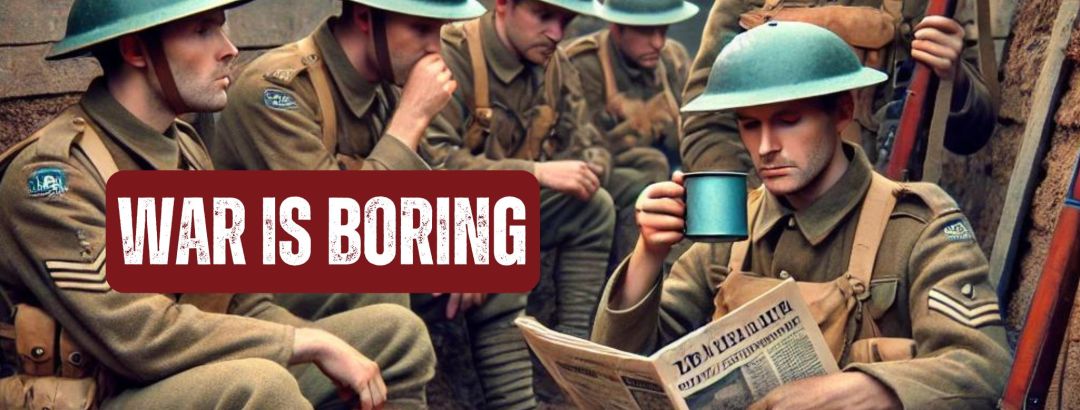
In this video, my guest Jake Gasson, dives into the complexities and challenges faced by British soldiers stationed on the Macedonian front during World War I.
The discussion revolves around the monotonous and uninspiring environment of the Macedonian countryside, which contributed significantly to the soldiers’ sense of boredom. The lack of engaging activities, the desolate landscape, and the repetitive labour tasks all exacerbated the feeling of monotony, making the Macedonian front a particularly uninteresting and morale-sapping posting compared to other theaters like the Western Front.
Jake emphasizes three key aspects that heightened the boredom for British soldiers in Macedonia:
- The Desolate Countryside: The soldiers were stationed far from the more vibrant city of Salonica, in a region devastated by previous conflicts like the Balkan Wars. This left the area barren, with few trees, destroyed villages, and a general lack of aesthetic appeal. The soldiers, who might have expected picturesque landscapes and quaint local cultures, were instead faced with desolation, further diminishing their spirits.
- Monotonous Duties: The lack of major operations meant that soldiers spent a significant amount of time on labour-intensive tasks, such as building roads, railways, and trenches. The repetitive nature of these duties, combined with the prolonged period of inactivity, contributed to a deep sense of boredom. The Macedonian front, compared to the Western Front, offered fewer opportunities for combat, making the soldiers’ experiences even more mundane.
- The Character of Warfare: While there were moments of combat and danger, such as sporadic shell fire, air raids, and gas attacks, the overall intensity of warfare in Macedonia was much lower than on the Western Front. This led to long periods of waiting without significant action, which, coupled with the soldiers’ perception that a major operation was unlikely, created a sense of hopeless confinement.
Jake also touches on the British soldiers’ perception of their Bulgarian enemies. Unlike the Germans, who were seen as barbaric and widely hated, the Bulgarians did not evoke the same level of animosity. In fact, the British soldiers developed a certain sympathy for the Bulgarians, who were often viewed as victims of the Germans rather than as true enemies. This lack of hatred further contributed to the soldiers’ lack of motivation and aggressiveness on the Macedonian front.
I think that this interview provides a deep exploration of the psychological and emotional toll of a lesser-known theater of World War I, offering insights into how the environment and nature of the conflict affected the soldiers stationed there. Let me know if you found it interesting.
If you want more content like this, weeks before anyone else then please join my Patreon page.

 redcoathistory.com